
ASTM D189 Conradson Carbon Residue Analyzer
ASTM D189 Conradson Carbon Residue Analyzer
MT-CR212
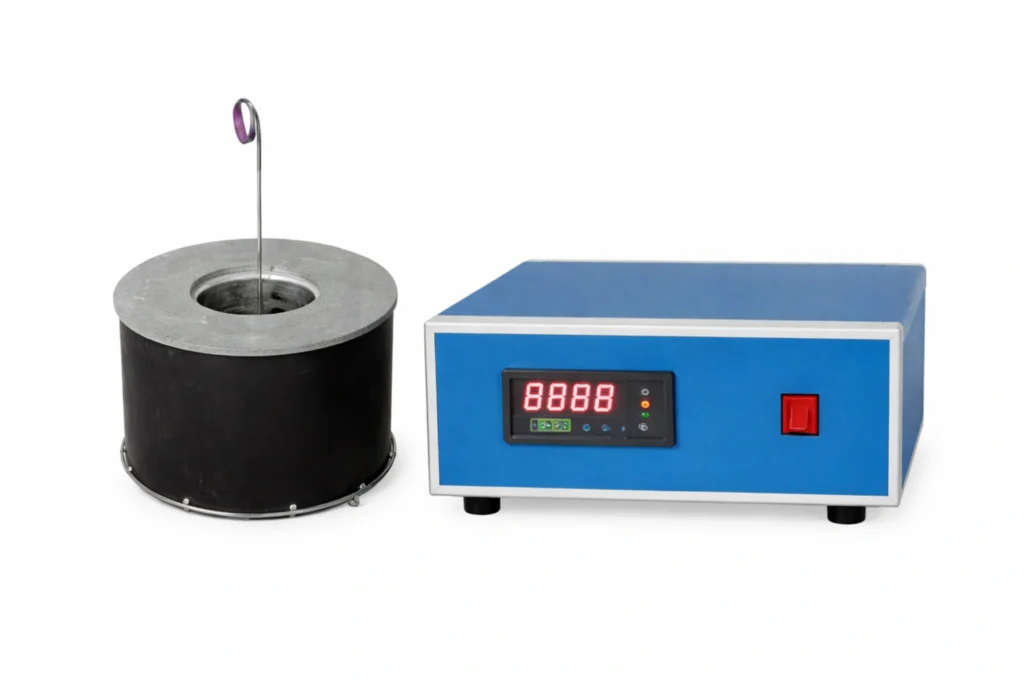
The ASTM D189 Conradson Carbon Residue Analyzer is designed to determine the carbon residue content of petroleum products using the traditional electric furnace method. The instrument is manufactured according to SH/T 0170 – Test Method for Carbon Residue of Petroleum Products (Electric Furnace Method) and corresponds to ASTM D189.
Introduction
Carbon residue is a key parameter used to evaluate the tendency of petroleum products to form coke deposits under high-temperature conditions. This method measures the mass percentage of carbonaceous residue remaining after controlled evaporation and thermal decomposition of the sample.
In this test, the petroleum sample—such as lubricating oil or heavy fuel oil—is heated in an electric furnace under specified conditions until volatile components are evaporated and carbonaceous residue remains. The final residue is weighed to determine the carbon residue content.
Compared with the micro carbon residue method (ASTM D4530), the Conradson method is a traditional and widely recognized testing procedure, particularly suitable for heavy petroleum products and residual fuels.
This instrument features compact structure, low power consumption, digital temperature control, and reliable operation, making it suitable for routine laboratory testing.
Typical Applications
The Conradson Carbon Residue Analyzer is used to determine the carbon residue content of petroleum products and heavy oils.
- Lubricating oils
- Heavy fuel oils
- Residual oils
- Petroleum distillation residues
- Industrial fuel oils
Typical application environments include:
- Petroleum refineries
- Petrochemical plants
- Fuel testing laboratories
- Metallurgical industry laboratories
- Research institutes and universities
Key Features
1. Electric Furnace Heating Method
The instrument adopts a standard electric furnace heating system, ensuring stable and uniform heating conditions for carbon residue testing.
2. Digital Temperature Control System
A digital temperature controller provides clear temperature display and precise temperature regulation, improving operational convenience.
3. Stable Constant Temperature Operation
The system maintains a constant temperature at 520°C ±5°C, meeting standard test requirements.
4. Multi-Sample Testing Design
The instrument is equipped with a four-hole bath structure, allowing multiple samples to be tested simultaneously.
5. Reliable and Safe Operation
The instrument features low power consumption, stable performance, and safe operation, suitable for continuous laboratory use.
Technical Specifications
|
Name |
MT-CR212 ASTM D189 Conradson Carbon Residue Analyzer |
|
Control Temperature |
520°C ±5°C |
|
Temperature Control Method |
Digital Temperature Controller |
|
Heating Method |
Electric Furnace |
|
Test Positions |
4 holes |
|
Temperature Sensor |
K-type Thermocouple |
|
Ambient Temperature |
10°C – 35°C |
|
Relative Humidity |
≤85% RH |
|
Power Supply |
AC 220 V ±5%, 50 Hz |
Standards Compliance
This Petroleum Carbon Residue Analyzer is designed according to:
- ASTM D189 – Standard Test Method for Conradson Carbon Residue of Petroleum Products
- SH/T 0170 – Test Method for Carbon Residue of Petroleum Products (Electric Furnace Method)
These standards are widely used for evaluating the coking tendency of heavy petroleum products and residual fuels.
Why Choose Our ASTM D189 Carbon Residue Analyzer
Reliable Traditional Carbon Residue Testing
Provides accurate determination of carbon residue content using the Conradson method.
Stable Electric Furnace Heating
Ensures uniform heating and consistent test conditions.
Simple and Intuitive Operation
Digital temperature display makes operation easy and user-friendly.
Multi-Sample Testing Capability
Four test positions improve laboratory efficiency.
Ideal for Heavy Oil Analysis
Suitable for heavy fuel oils, lubricants, and petroleum residues.