Automatic Oil Demulsibility Analyzer
Automatic Oil Demulsibility Analyzer
MT-DM695
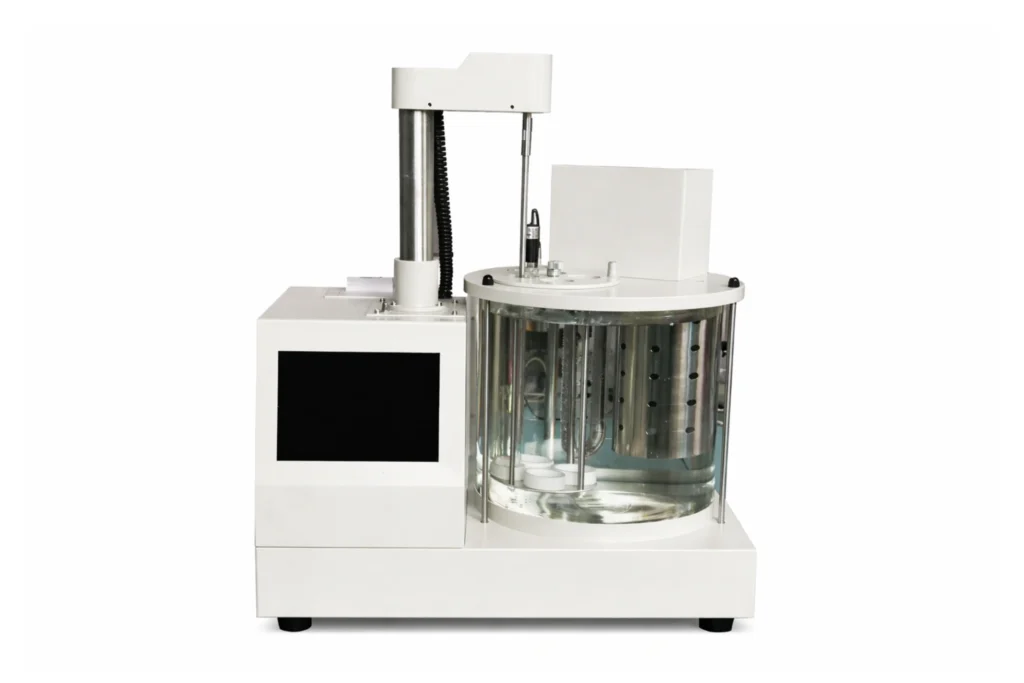
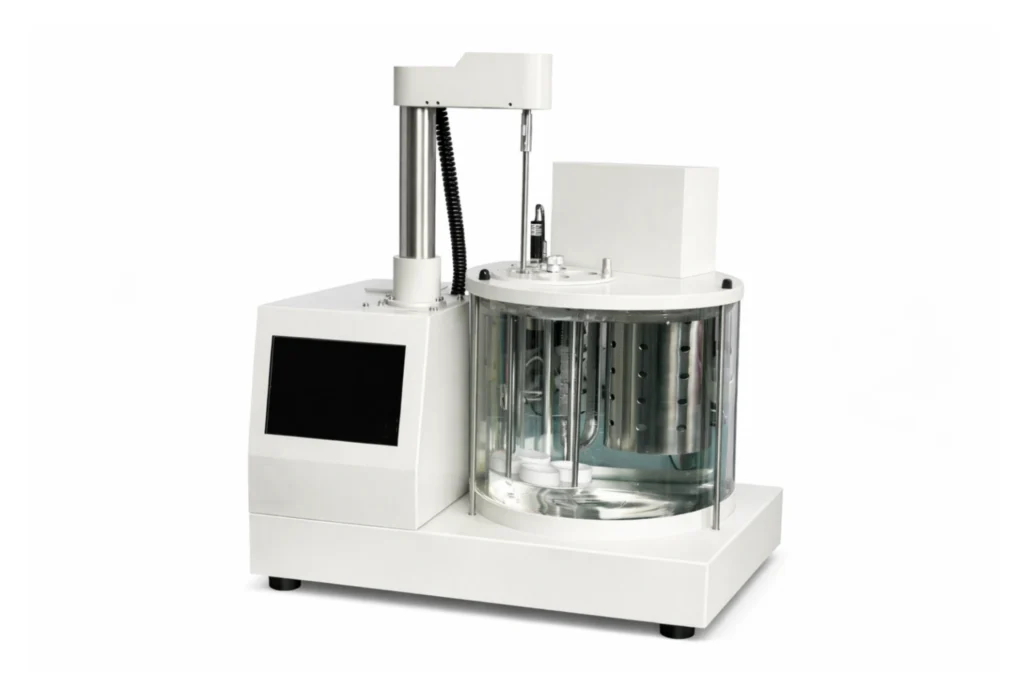
The Automatic Oil Demulsibility Analyzer is designed for determining the water separation characteristics of petroleum products and synthetic fluids under controlled laboratory conditions. The instrument conforms to ASTM D1401, GB/T 7305, and GB/T 7605 testing standards used for evaluating the demulsibility performance of lubricating oils.
Introduction
In industrial lubrication systems such as turbines, compressors, and hydraulic equipment, lubricants may become contaminated with water during operation. Oils with poor water separation ability may form stable emulsions, which can cause lubrication failure, corrosion, oxidation, and reduced equipment reliability. Therefore, evaluating the oil-water separation performance is an important part of lubricant quality control.
This automatic analyzer integrates microprocessor control, intelligent temperature regulation, automated stirring, and digital data management, providing stable and repeatable testing conditions for modern petroleum laboratories. The instrument features a touchscreen interface, automatic timing, automatic lifting stirring mechanism, and multi-sample testing capability, significantly improving testing efficiency and reducing operator workload.
The analyzer is widely used in petroleum refineries, lubricant production facilities, power generation plants, chemical laboratories, railway maintenance departments, and scientific research institutions.
Typical Applications
The Automatic Oil Demulsibility Analyzer is used to evaluate the water separability of petroleum oils and synthetic lubricants in laboratory environments.
- Turbine oils
- Hydraulic oils
- Circulating oils
- Industrial lubricants
- Synthetic lubricants
- In-service turbine oils
Typical application environments include:
- Petroleum refining laboratories
- Lubricant manufacturing plants
- Power generation and turbine maintenance facilities
- Chemical industry laboratories
- Railway equipment maintenance departments
- Oil analysis and quality control laboratories
- Research institutions
Key Features
1. Intelligent Touchscreen Control System
The instrument adopts a color touchscreen interface with Chinese and English language options, allowing operators to easily input preset parameters such as temperature and test duration through guided menus.
2.Advanced Microprocessor Temperature Control
The system is controlled by an STM microprocessor with adaptive PID temperature control algorithm, automatically adjusting the heating curve to meet standard testing requirements.
3. Ultra-High Temperature Control Accuracy
The instrument provides highly stable temperature regulation with an accuracy of ±0.01°C, ensuring precise and repeatable demulsibility testing conditions.
4. Fully Automated Stirring and Timing
The analyzer performs automatic stirring and automatic timing, while the stirring motor arm automatically lifts and lowers the test tubes, greatly reducing manual operation.
5. Four-Sample Simultaneous Testing
The system supports four test positions, enabling simultaneous analysis of multiple samples and significantly improving laboratory productivity.
6. Automatic Alarm and Data Storage
When the test time is completed, the instrument automatically triggers an alarm. Up to 500 test results can be stored, allowing convenient historical data review.
7. Quiet and Reliable Mechanical Transmission
The mechanical transmission system operates smoothly with minimal noise, ensuring long-term stable performance.
8. Durable Stainless Steel Components
Critical internal components including heating elements and stirring parts are made of corrosion-resistant stainless steel, ensuring durability and reliability.
9. Adjustable Stirring Speed (Optional)
Optional configuration allows adjustable stirring speeds from 300 r/min to 2000 r/min, providing flexible testing capability for different applications.
10. Upgradeable Software and Multi-Language Interface
The instrument supports multiple language display options, and the internal software can be upgraded when testing standards are updated.
Technical Specifications
|
Name |
MT-DM695 Automatic Oil Demulsibility Analyzer |
|
Display |
Color Touchscreen (Chinese / English) |
|
Temperature Control Range |
-20°C – 180°C (Cooling unit required below ambient temperature) |
|
Temperature Control Accuracy |
±0.01°C |
|
Stirring Speed |
1500 r/min ±15 r/min |
|
Temperature Sensor |
Platinum Resistance (Class A PT100) |
|
Optional Stirring Speed Range |
300 – 2000 r/min |
|
Test Positions |
4 |
|
Data Storage |
500 test records |
|
Power Supply |
AC 220V ±10%, 50Hz |
|
Operating Environment |
Room Temperature – 40°C, Ambient Humidity ≤85% RH |
|
Dimensions |
540 × 380 × 600 mm |
Standards Compliance
This Automatic Oil Water Separability Analyzer is designed and manufactured in accordance with the following testing standards:
- ASTM D1401 – Standard Test Method for Water Separability of Petroleum Oils and Synthetic Fluids
- GB/T 7305 – Petroleum and Synthetic Fluids — Determination of Demulsibility Characteristics
- GB/T 7605 – Determination of Demulsibility of Turbine Oils in Service
These standards are widely applied in petroleum laboratories and lubricant testing facilities for evaluating the water separation performance of lubricating oils.
Why Choose Our Automatic Oil Demulsibility Analyzer
Automated Laboratory Testing
Automatic stirring, timing, and lifting mechanisms significantly reduce manual operation and improve testing efficiency.
High-Precision Temperature Control
Advanced PID temperature regulation technology ensures highly stable testing conditions with ±0.01°C accuracy.
Multi-Sample Analysis Capability
Four simultaneous test positions enable laboratories to increase throughput and reduce testing time.
Intelligent Data Management
Internal storage allows up to 500 historical test records, providing convenient traceability for laboratory data.
Reliable Construction for Continuous Operation
Durable stainless steel components and stable mechanical transmission ensure long-term reliable operation in laboratory environments.