
Digital Density Meter for Petroleum
Digital Density Meter for Petroleum
MT-DT605
Hydrometer Method for for Density of Petroleum and Liquid Petroleum Products, Controlling a temperature range from -20℃ ~ 100℃ .
Introduction
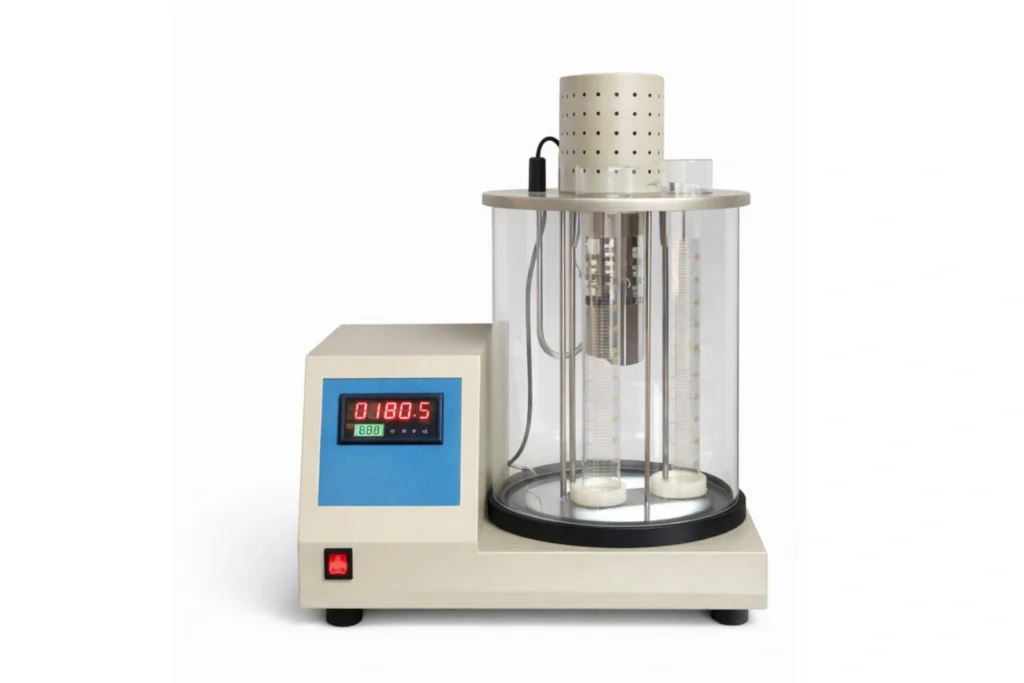
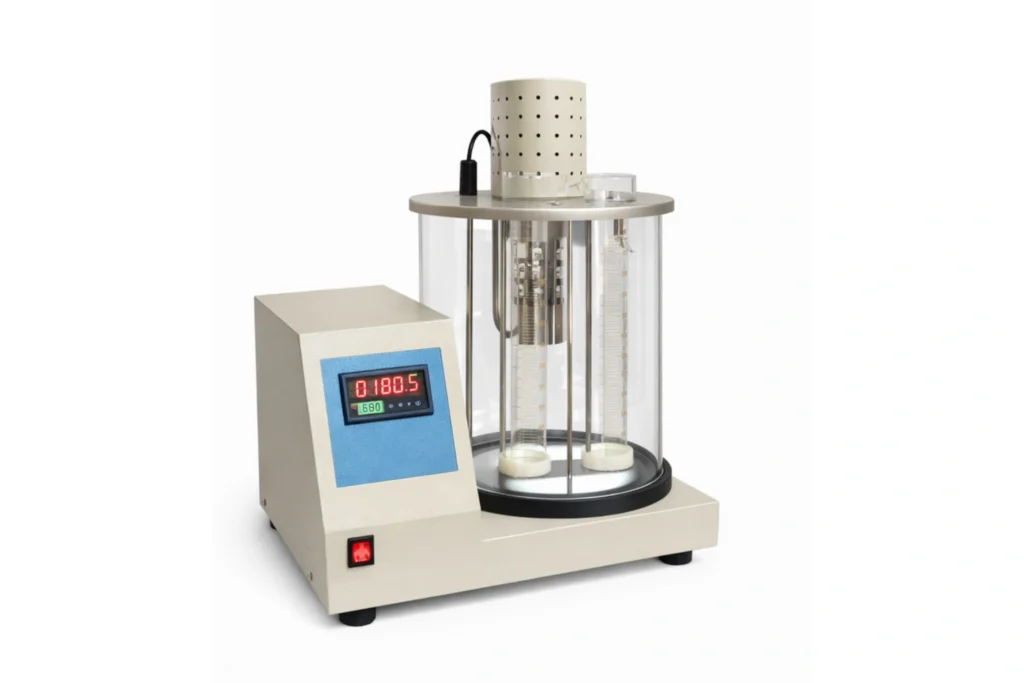
The Digital Density Meter for Petroleum is designed in accordance with GB/T 1884 – Test Method for Density of Petroleum and Liquid Petroleum Products (Hydrometer Method). It is mainly used for determining the density of transparent, low-viscosity liquids as well as viscous petroleum products under controlled temperature conditions.
This petroleum density tester provides stable constant-temperature performance with a digital display interface, offering a practical and cost-effective solution for routine petroleum density testing in refineries, petrochemical plants, inspection agencies, and laboratory quality control environments.
Typical Applications
- Crude oil density testing
- Diesel, gasoline, and fuel oil analysis
- Lubricating oil and base oil density measurement
- Petrochemical liquid density determination
- Laboratory quality control and inspection agencies
Key Features
1. Digital Display Interface (Chinese/English Optional)
Clear digital temperature display allows operators to monitor and control testing conditions easily.
2. PID Self-Tuning Temperature Control
Advanced PID temperature control technology ensures stable bath temperature and reliable density determination.
3. Large Glass Constant-Temperature Bath
Excellent thermal insulation and temperature uniformity provide stable measurement conditions for hydrometer-based density testing.
4. Temperature Correction Function
Supports temperature correction and constant-point adjustment to meet standard petroleum testing requirements.
5. Optional Refrigeration Circulator
When equipped with a cooling system, the instrument supports low-temperature density testing for specific petroleum products.
6. Data Storage & Result Printing
Capable of storing historical test records and printing results for documentation and traceability.
Technical Specifications
|
Name |
MT-DT605 Digital Density Meter for Petroleum |
|
Display |
Digital temperature display |
|
Temperature Control Range |
Ambient to 80°C (extended range available with refrigeration system) |
|
Resolution |
0.01°C |
|
Temperature Control Accuracy |
±0.02°C |
|
Test Positions |
3 test holes |
|
Dimensions (W × D × H) |
460 × 300 × 470 mm |
|
Operating Conditions |
Recommended room temperature to 45°C, Ambient Humidity: ≤85% RH |
|
Power Supply |
AC 220 V ±10%, 50 Hz ±2.5 Hz |
|
Weight |
25 kg |
Standards Compliance(Digital Density Meter)
This petroleum density meter is designed in accordance with the following testing standards and laboratory practices:
- GB/T 1884 – Test Method for Density of Petroleum and Liquid Petroleum Products (Hydrometer Method)
- Operational principles aligned with ASTM D1298 hydrometer density testing
The instrument provides the constant temperature conditions required by petroleum density standards, ensuring laboratory compliance and data reliability.
Why Choose Our Digital Density Meter
Practical and Cost-Effective for Routine QC
Compared with touchscreen automatic models, this petroleum density tester offers reliable temperature control and standard-compliant testing at a lower investment cost, making it ideal for routine laboratory density analysis.
Stable Temperature = Reliable Density Results
Density measurement accuracy depends directly on temperature stability. With PID self-tuning control and ±0.02°C accuracy, this instrument ensures repeatable and consistent petroleum density results.
Optimized for Petroleum Industry Standards
Fully designed to operate under GB/T 1884 hydrometer method principles, the instrument provides standardized testing conditions for petroleum and liquid petroleum products.
Efficient Multi-Sample Testing
Three test positions allow multiple samples to reach equilibrium under identical temperature conditions, improving laboratory efficiency.